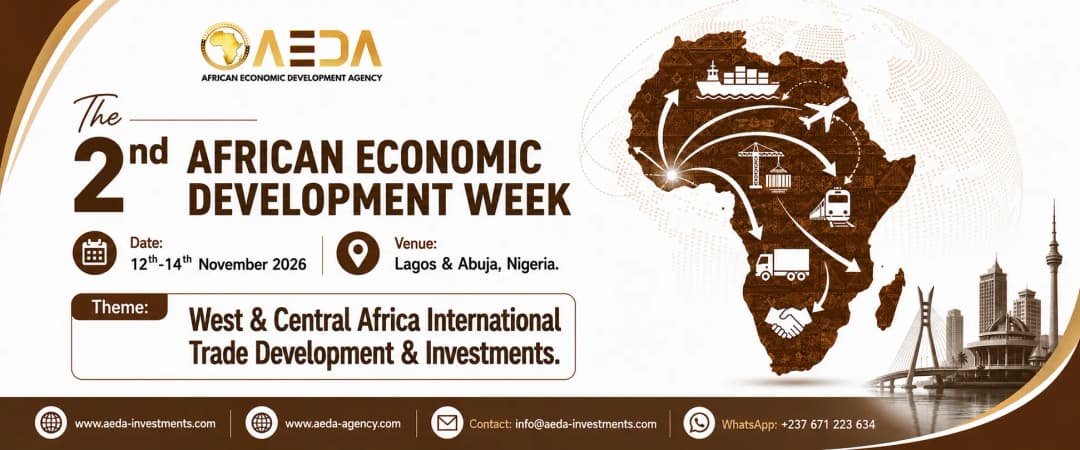


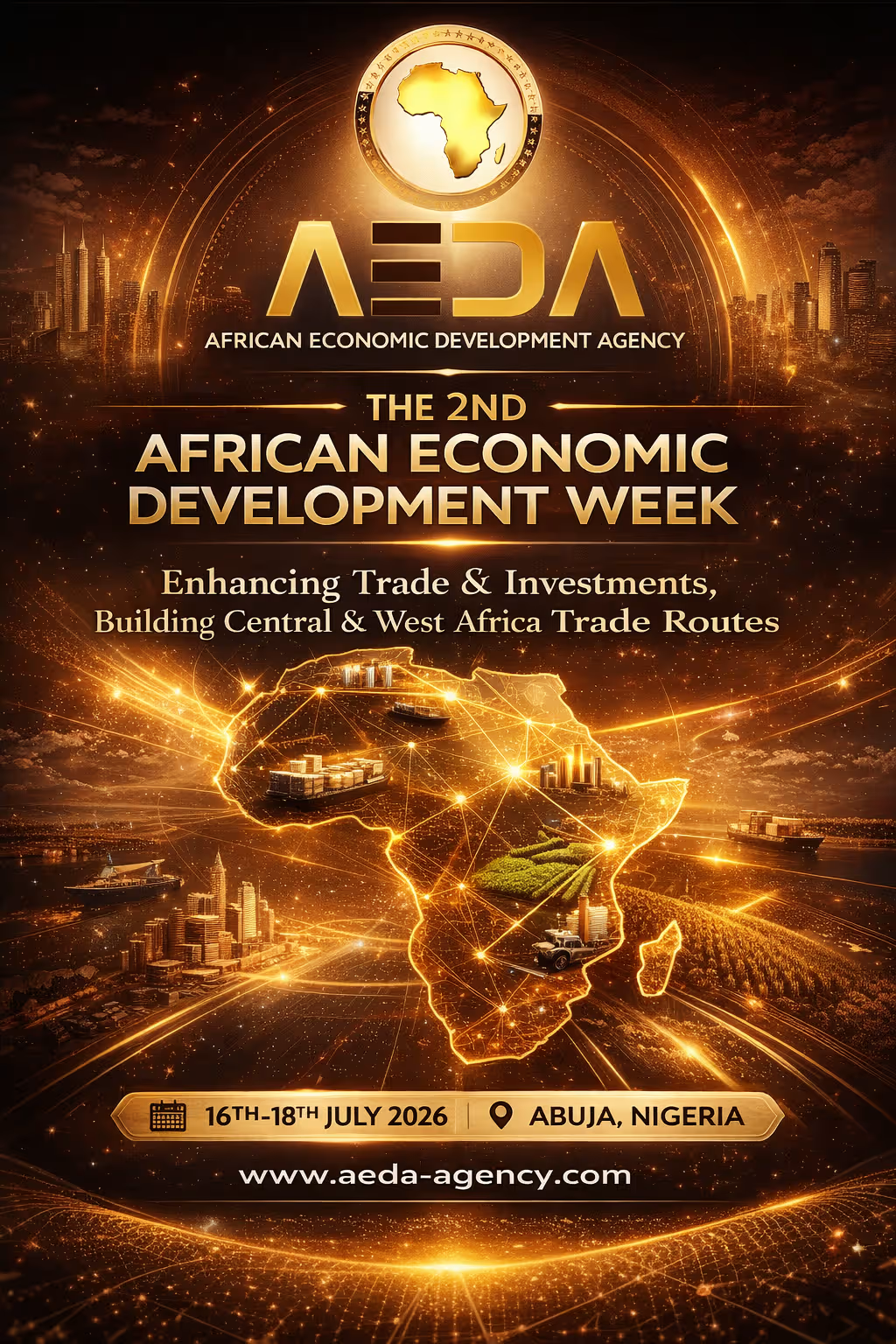
The 2nd African Economic Development Week
Purpose & Strategic Importance
The 2nd Africa Development Week aims to provide a high-level continental platform to accelerate trade integration and investment flows across Central and West Africa.
By convening policymakers, regional institutions, private investors, and trade stakeholders, the event seeks to focus energy on building efficient trade corridors, unlocking cross-border investment, and supporting value-chain development.
The timing is opportune: across Africa, there is increasing momentum on infrastructure-led regional integration and trade facilitation as a driver for growth.
Key Themes & Priorities
Under the overarching theme, the summit will likely concentrate on several interlinked priorities:
Regional Infrastructure & Connectivity
Promoting development of physical trade routes (roads, rail, corridors) to ease movement of goods and people across Central and West Africa.
Trade Facilitation & Regulatory Harmonization
Supporting reforms to customs, cross-border trade protocols, and adoption of digital trade facilitation tools.
Mobilization of Investment
Catalysing public and private investments into trade-promoting infrastructure, industrial zones, logistics hubs, and value-addition sectors.
Value Chains & Industrialisation
Encouraging local industrial capacity and intra-African manufacturing to reduce reliance on raw-material export, add value locally, and supply regional markets.
Regional Integration & Market Expansion
Leveraging regional trade frameworks to strengthen intra-African trade, connecting producers, consumers, and investors across countries.
Why Nigeria — and What It Can Offer
As Africa's most populous country and one of the leading economies on the continent, Nigeria occupies a central position in West Africa's trade and investment landscape. Hosting the summit there positions it as a hub for continental integration efforts.
Nigeria has recently undertaken reforms and investments to modernize trade infrastructure — including port upgrades, digital trade facilitation systems, and improvements in customs and border procedures — strengthening its capacity to host and lead such a regional trade/dialogue event.
More broadly, the choice of Nigeria as venue demonstrates a shift: rather than merely participating, Nigeria becomes a platform for shaping strategies and partnerships that can benefit much of West and Central Africa.
Expected Outcomes & Deliverables
By the end of the 2nd Africa Development Week, stakeholders and participants may aim to:
Agree on concrete regional infrastructure initiatives (transport corridors, logistics hubs, transnational roads/rail) to improve connectivity.
Secure investment pledges (public and private) for trade-related infrastructure, industrial zones, and cross-border projects.
Outline joint strategies and policy frameworks for customs harmonization, trade facilitation, and regulatory alignment across participating nations.
Strengthen networks and partnerships among governments, development finance institutions, investors, and regional trade organizations — enabling follow-through on trade and investment plans.
Promote value-added production capacities — encouraging manufacturing, agro-processing, and regional supply-chain development rather than commodity export alone, boosting intra-African trade.
Key Highlights
Major Investment Commitments
As in the first edition, significant funding pledges may be announced (e.g. multi-billion dollar funds dedicated to infrastructure, trade corridors, value-chain development, and support for SMEs and youth/entrepreneurship).
High-level Public-Private Roundtables & B2B Meetings
The event convenes government officials, regional institutions, private investors, business leaders, entrepreneurs and youth, to open dialogue, forge partnerships, and build networks for trade & investment.
Focus on Trade Corridor & Infrastructure Plans
Proposals around building or improving transport corridors (roads, rail, logistical hubs) linking Central and West Africa; aimed at facilitating cross-border trade and reducing barriers to movement of goods.
Promotion of Intra-African Trade
Emphasis on regulatory harmonization, trade facilitation and leveraging regional agreements to deepen integration across countries in Central and West Africa.
Support for Value-Addition & Industrial Development
Encouraging investment not just in raw trade, but in manufacturing, agro-processing, small/medium enterprises, and local industry — to create jobs and build economic resilience.
Inclusion of Youth & Women Entrepreneurs
Giving opportunities to young entrepreneurs and women-led ventures to attract investment and integrate them in regional value chains, which helps ensure inclusive growth.
Commitment to Institutional & Policy Reforms
Using the summit as a platform to push for stronger institutional capacity, improved regulatory frameworks, ease-of-doing-business reforms, and transparent mechanisms to attract and secure foreign and intra-African investments.
Showcase of Africa's Investment Potential
Presenting Africa's opportunities: demographic dividend, natural resources, growing markets, regional connectivity — to domestic and international investors, highlighting why Africa is a strategic investment destination.